Home > News > Industry News
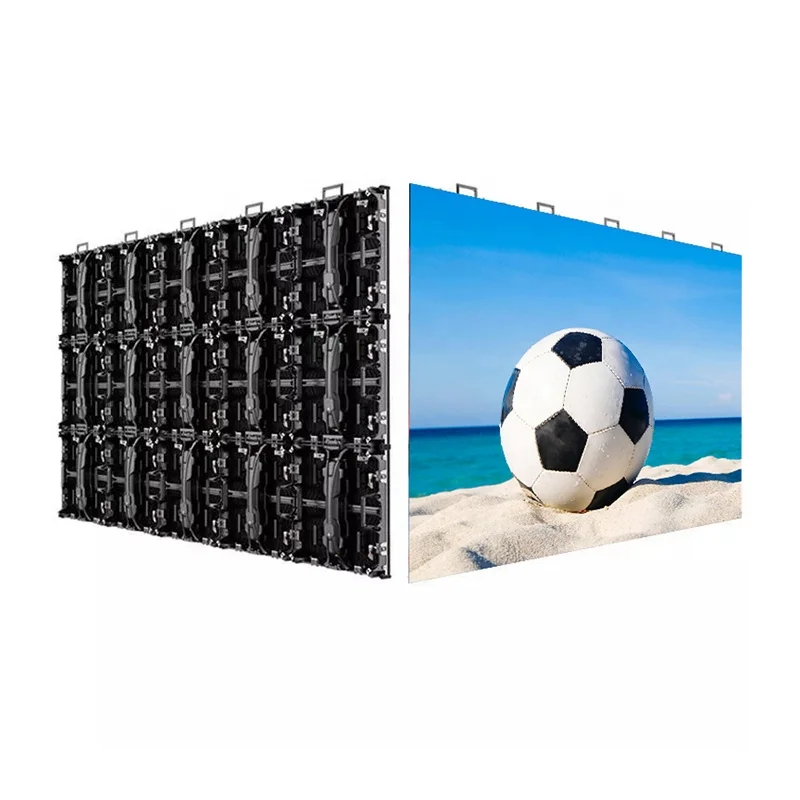
Outdoor LED walls have become increasingly popular for churches, stadiums, concerts, retail centers, and public venues. They deliver massive visual impact, excellent brightness, and flexible installation options.
However, many buyers underestimate how complex outdoor LED projects can become.
Choosing the wrong screen, ignoring environmental factors, or underestimating installation requirements can lead to expensive problems later. Therefore, businesses should evaluate outdoor LED systems carefully before making a purchase.
This guide explains the most important factors to consider when planning an outdoor LED wall installation.
Outdoor LED displays operate in far harsher conditions than indoor screens.
Rain, heat, sunlight, wind, and dust constantly affect performance. At the same time, outdoor displays often run for long hours every day.
As a result, outdoor LED projects require stronger engineering, higher brightness, and more durable materials.
Many first-time buyers focus only on screen size and resolution. In reality, those are only part of the equation.
A successful outdoor LED installation also depends on:
Ignoring these factors can shorten the display’s lifespan and increase maintenance costs.
Brightness is one of the most important specifications for outdoor LED displays.
Indoor LED screens typically operate between 800 and 1500 nits. Outdoor installations, however, often require 5000 nits or more to remain visible under direct sunlight.
Without sufficient brightness:
Therefore, buyers should always evaluate real-world brightness performance instead of relying only on marketing claims.
Additionally, automatic brightness adjustment can improve energy efficiency while maintaining visibility throughout the day.
Many buyers assume smaller pixel pitch always means better image quality. However, outdoor LED projects work differently.
Viewing distance plays a major role in pixel pitch selection.
For example:
If viewers stand far away, ultra-fine pixel pitch may simply increase costs without delivering noticeable visual improvement.
Therefore, businesses should match pixel pitch to actual audience distance instead of pursuing maximum resolution unnecessarily.
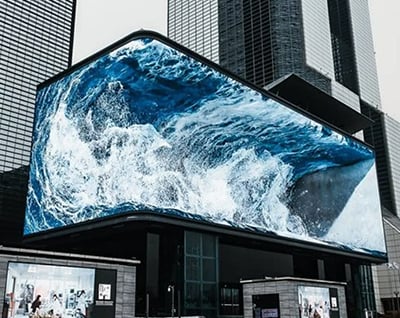
Outdoor LED walls face continuous environmental stress.
Because of this, weather protection should never become an afterthought.
A reliable outdoor LED display should include:
Many outdoor LED screens use IP65-rated protection to handle rain and dust exposure effectively.
In hot climates, cooling systems and ventilation become especially important. Excessive heat can shorten LED lifespan and reduce display stability over time.
One of the biggest surprises for new buyers is the installation cost.
Outdoor LED walls require strong steel structures capable of handling:
In many projects, structural work represents a significant portion of the total budget.
For this reason, businesses should involve structural engineers early in the planning process. A poorly designed support structure can create serious safety risks and expensive future repairs.
Every LED wall eventually requires maintenance.
Modules may fail, power supplies may need replacement, and calibration adjustments may become necessary over time.
Therefore, maintenance accessibility should influence cabinet selection from the beginning.
Front-service LED cabinets work well in locations with limited rear access. Meanwhile, rear-service designs may simplify maintenance in larger installations with enough service space.
Easy maintenance access reduces downtime and lowers labor costs throughout the display’s lifespan.
Even high-quality LED hardware can look poor with badly optimized content.
Outdoor LED walls perform best with:
Complex visuals with excessive detail often become difficult to read from long distances.
Additionally, content creators should optimize videos for the screen’s actual resolution and aspect ratio to avoid scaling problems.
Outdoor LED walls offer enormous advantages for advertising, live events, worship environments, and public communication. However, successful projects require far more than choosing a large screen.
Brightness, pixel pitch, weather resistance, structural engineering, and maintenance planning all play critical roles in long-term performance.
Businesses that carefully plan every aspect of the installation will achieve better reliability, lower operating costs, and stronger visual impact for years to come.
 EN
EN
 AR
AR
 BG
BG
 HR
HR
 CS
CS
 DA
DA
 NL
NL
 FI
FI
 FR
FR
 DE
DE
 EL
EL
 HI
HI
 IT
IT
 JA
JA
 KO
KO
 NO
NO
 PL
PL
 PT
PT
 RO
RO
 RU
RU
 ES
ES
 SV
SV
 TL
TL
 ID
ID
 SR
SR
 UK
UK
 VI
VI
 ET
ET
 HU
HU
 TH
TH
 TR
TR
 FA
FA
 AF
AF
 MS
MS
 GA
GA
 HY
HY
 AZ
AZ
 MN
MN
 UZ
UZ