Home > News > Industry News
Retail stores no longer compete only on products and prices. Today, customers expect memorable experiences. As a result, more brands are using custom LED displays to transform ordinary stores into immersive retail environments.
Instead of serving as simple advertising tools, modern LED screens now act as storytelling platforms. They guide customers through a brand journey, create emotional connections, and encourage social sharing.
In this article, we'll explore how businesses can use custom LED displays to build immersive retail spaces and improve customer engagement.
Online shopping offers convenience, but physical stores provide something e-commerce cannot: real-world experiences.
Immersive retail combines digital technology with physical environments to create memorable interactions. When customers feel engaged, they stay longer, interact more with products, and often spend more.
Custom LED displays play a key role in this transformation because they bring movement, storytelling, and interactivity into the retail space.
Different areas of a store require different display solutions. Therefore, retailers should match LED screen types with specific customer touchpoints.
The storefront creates the first impression. A transparent LED screen installed behind the shop window can display dynamic promotions, product launches, and brand stories without blocking natural light.
Modern transparent LED displays offer transparency levels between 40% and 70%, allowing customers to see both the content and the products behind the screen.
Benefits include:
For retailers launching new products or running seasonal campaigns, transparent LED screens can significantly boost attention and store visits.
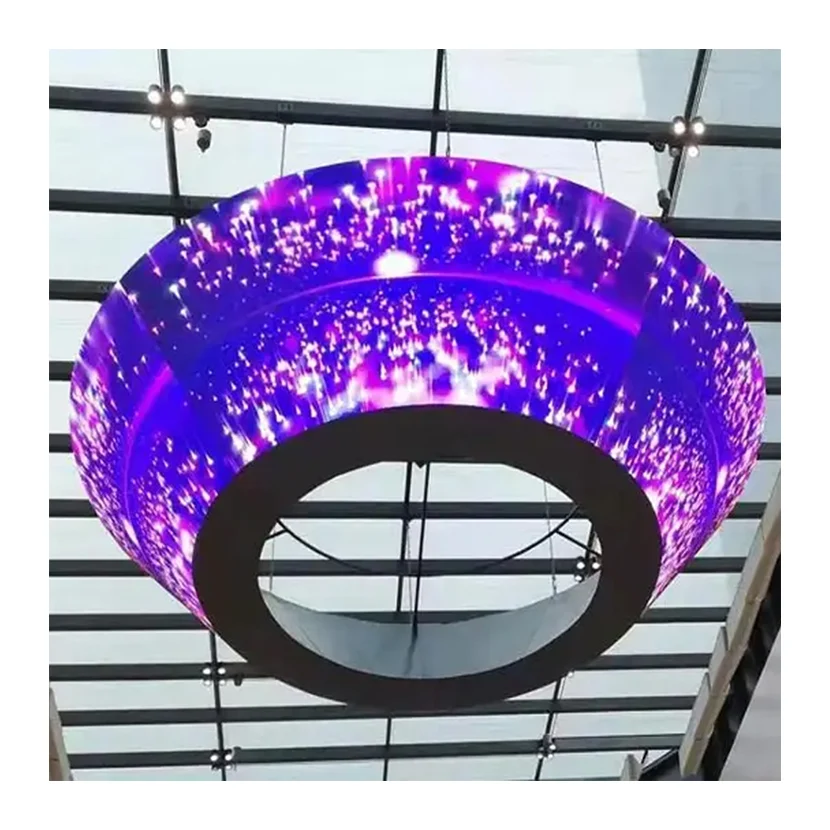
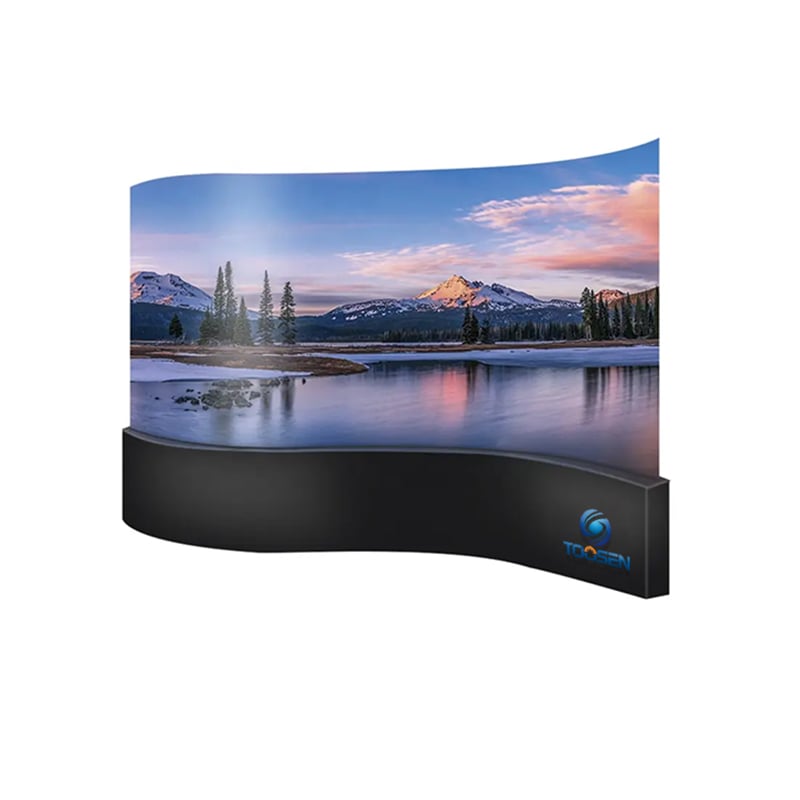
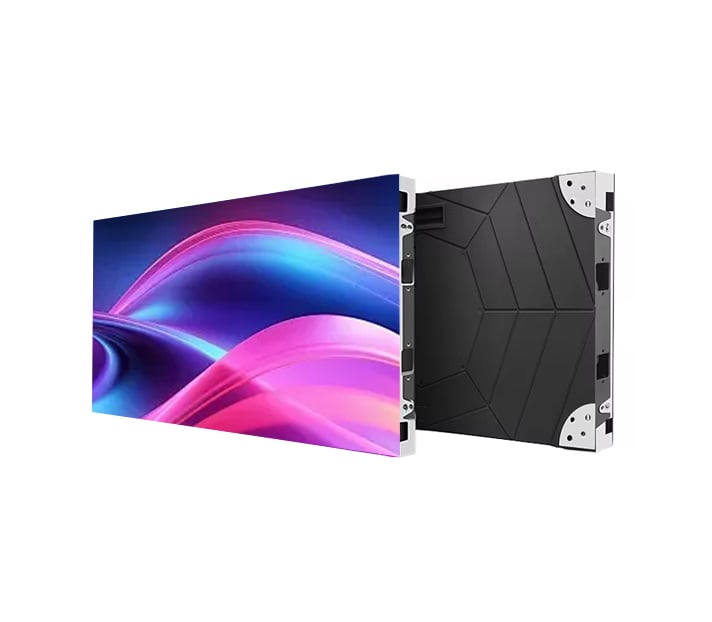
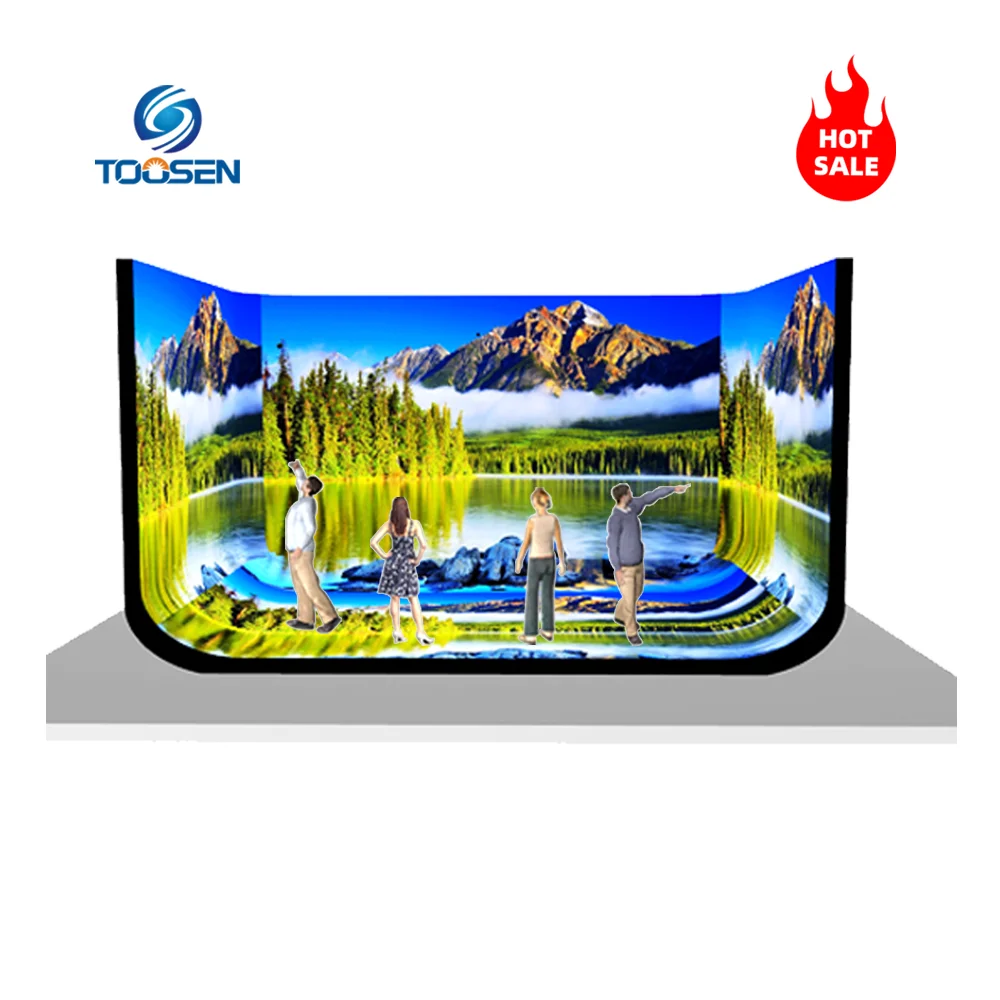
Curved LED walls help retailers surround customers with digital content. Unlike traditional flat screens, flexible LED modules can form:
As customers move through the store, these displays create a seamless visual journey.
For retail applications, experts generally recommend:
| Specification | Recommendation |
|---|---|
| Pixel Pitch | P1.8–P2.5 |
| Viewing Distance | Close-range viewing |
| Refresh Rate | High refresh rate for smartphone-friendly recording |
| Maintenance | Front-service magnetic modules |
High-resolution curved LED walls help brands create visually stunning environments while maintaining excellent image quality.
The final purchase decision often happens directly in front of the shelf.
Shelf-edge LED strips allow retailers to display:
Because these displays communicate information at the exact point of purchase, they can improve conversion rates and encourage impulse buying.
Many retailers now consider shelf-edge LED displays an essential part of their digital merchandising strategy.
Interactive technology continues to reshape retail experiences.
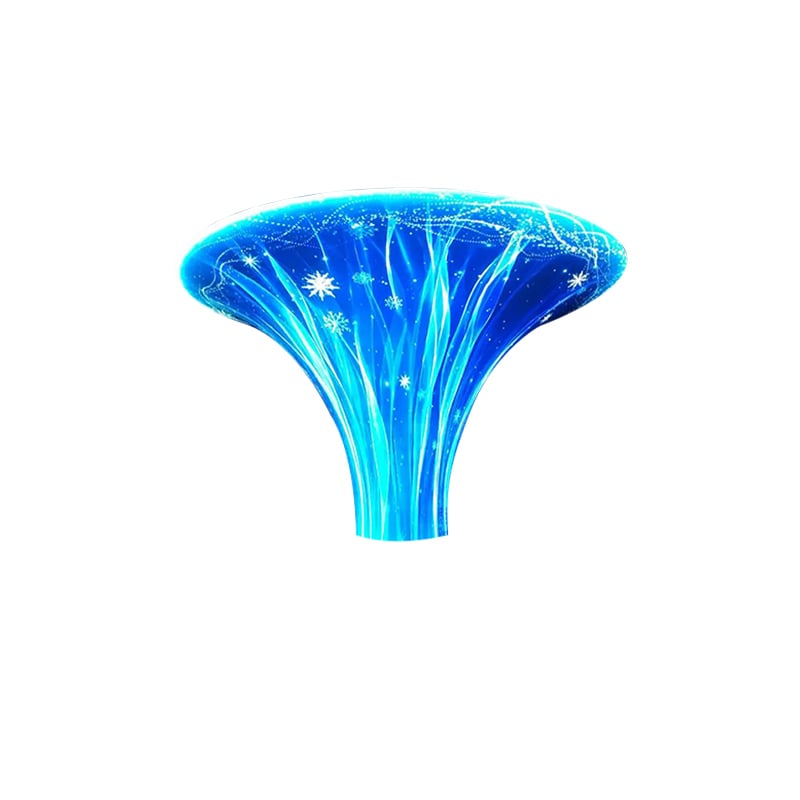
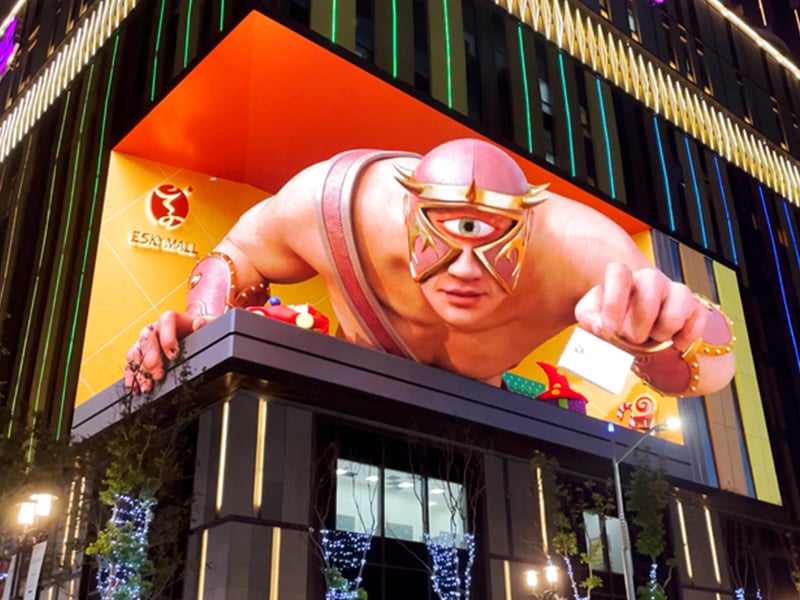
Naked-eye 3D LED screens create impressive three-dimensional visuals without requiring glasses. These installations often become focal points that attract visitors and generate social media exposure.
Retailers can integrate technologies such as:
As a result, screen content changes according to customer movement. This interaction makes shoppers active participants rather than passive viewers.
Technology alone does not create immersion. Successful projects follow several important design principles.
The biggest trend in retail design is the convergence of physical and digital experiences, often called "phygital retail."
Instead of adding screens as separate elements, brands should integrate LED displays directly into the architecture.
Examples include:
When digital content and physical products work together, customers experience a more natural and engaging environment.
Many retailers make the mistake of overwhelming customers with too much stimulation.
A better approach is to let one sense lead the experience while other senses support it.
For example:
Large curved LED walls display brand films and immersive scenery.
A perfume retailer can show blooming flower fields while releasing matching scents.
A fashion store can display fabric details on screens while offering physical samples nearby.
This balanced approach creates a stronger emotional response without causing sensory fatigue.
Customers connect with stories more than sales messages.
Therefore, retailers should use LED displays to create narratives around products.
A running brand can simulate:
Customers feel as though they are moving through different environments while exploring products.
A skincare company can showcase ingredient origins such as:
This storytelling approach builds trust and emotional connection.
Luxury retailers often use immersive visual experiences to highlight craftsmanship, heritage, and brand history.
Instead of focusing on features, they focus on meaning.
Retail environments change frequently. Seasonal campaigns, product launches, and promotional events all require new content.
Therefore, retailers should invest in modular LED systems.
Key features include:
With a modular design, brands can refresh store experiences quickly without major renovations.
Successful immersive retail projects typically follow four stages.
| Stage | Key Actions |
|---|---|
| Planning | Analyze customer journeys, map touchpoints, define content strategy |
| Product Selection | Choose pixel pitch, brightness, display shape, and control system |
| Integration | Build supporting structures, optimize power distribution, ensure signal synchronization |
| Operation | Deploy CMS software, create content calendars, automate content updates |
For brightness selection:
| Application | Recommended Brightness |
|---|---|
| Indoor Retail | 800–1,500 nits |
| Window Displays | 2,000–4,000 nits |
Choosing the correct specifications during the planning stage helps maximize long-term performance and return on investment.
Custom LED displays have evolved far beyond traditional digital signage. Today, they help retailers create immersive environments that attract visitors, tell compelling stories, and strengthen customer engagement.
Whether through transparent window screens, curved LED walls, shelf-edge displays, or interactive 3D installations, retailers can transform physical stores into memorable destinations.
As immersive retail continues to grow in 2026, brands that integrate LED technology into their customer experience strategy will stand out in an increasingly competitive market.
 EN
EN
 AR
AR
 BG
BG
 HR
HR
 CS
CS
 DA
DA
 NL
NL
 FI
FI
 FR
FR
 DE
DE
 EL
EL
 HI
HI
 IT
IT
 JA
JA
 KO
KO
 NO
NO
 PL
PL
 PT
PT
 RO
RO
 RU
RU
 ES
ES
 SV
SV
 TL
TL
 ID
ID
 SR
SR
 UK
UK
 VI
VI
 ET
ET
 HU
HU
 TH
TH
 TR
TR
 FA
FA
 AF
AF
 MS
MS
 GA
GA
 HY
HY
 AZ
AZ
 MN
MN
 UZ
UZ