Home > News > Industry News
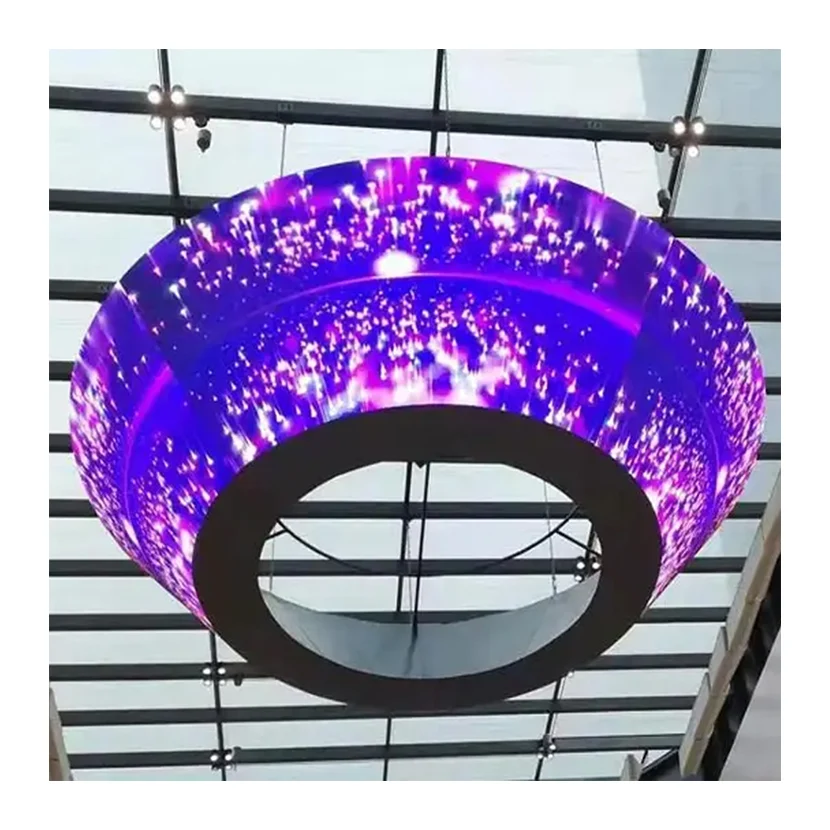
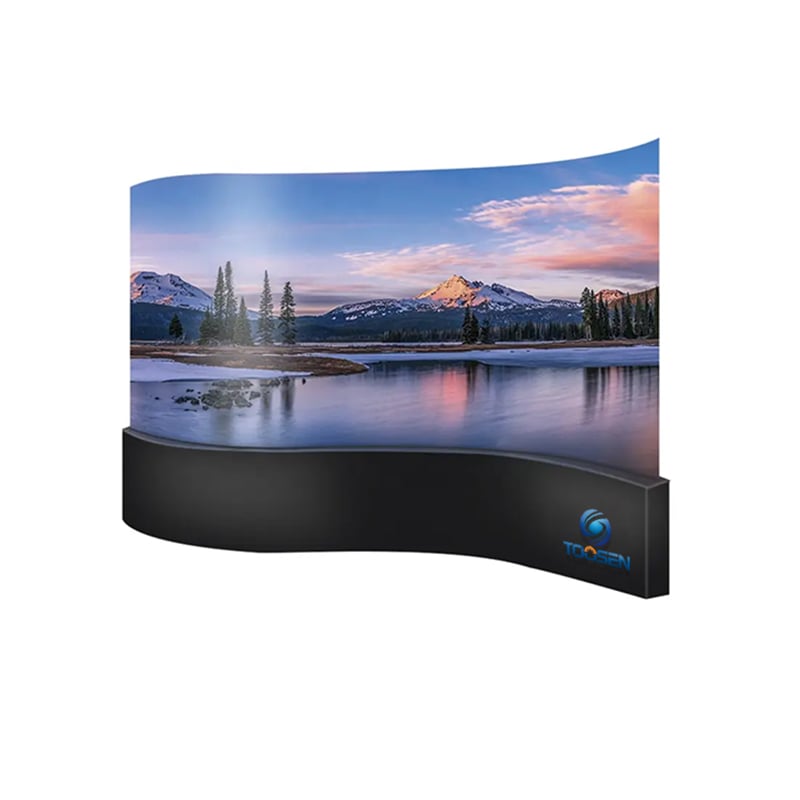
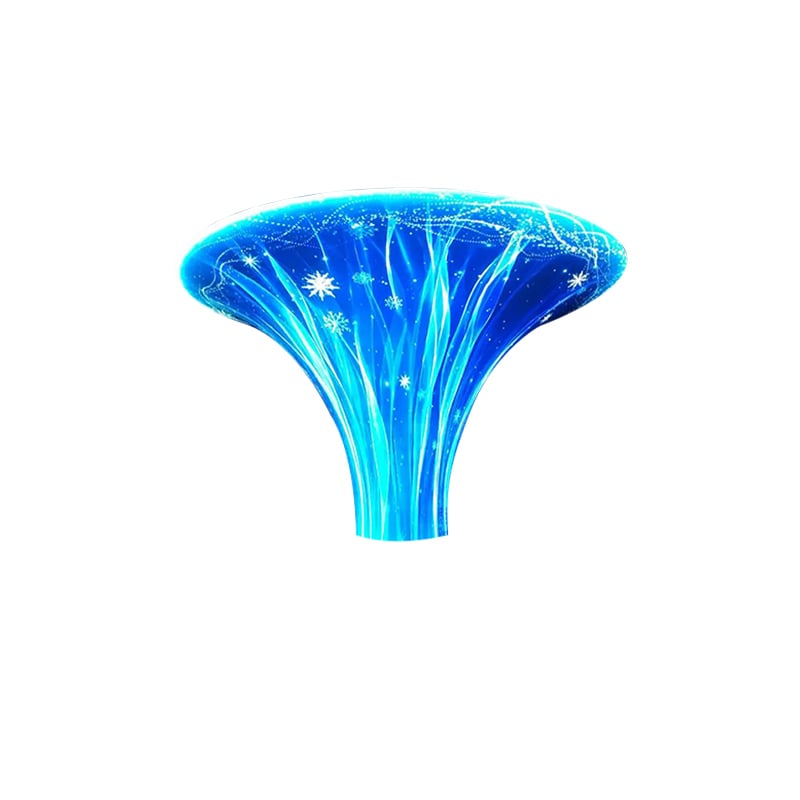
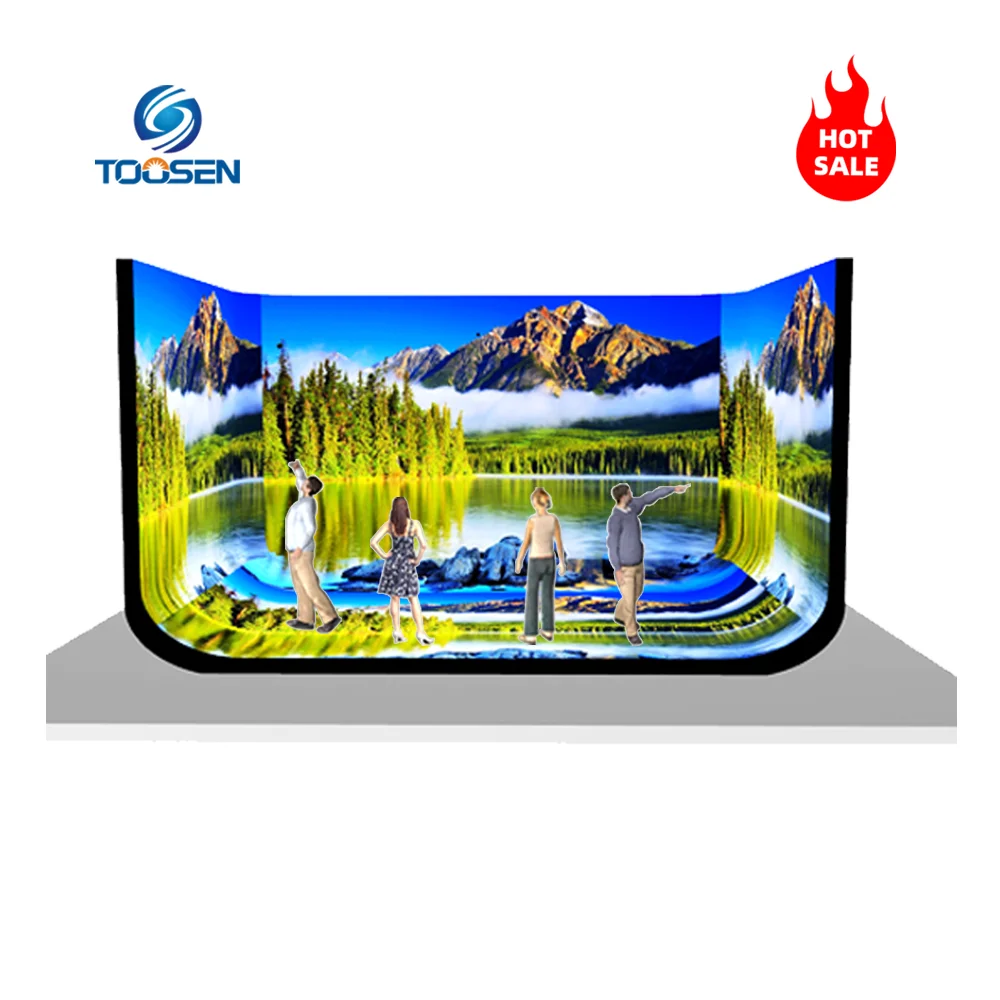
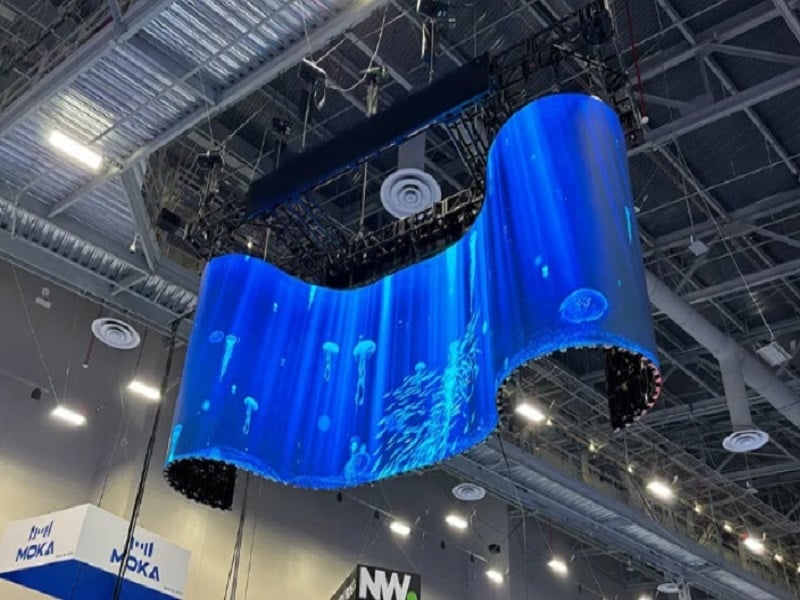
Suspended curved LED displays have become a popular choice for shopping malls, exhibition halls, airports, conference centers, television studios, and large-scale events. Their elegant curves and floating appearance create a powerful visual impact that traditional flat screens cannot match.
However, hanging a curved LED screen from a ceiling involves more than simply attaching cabinets to a support structure. The combination of weight, curvature, suspension points, and electrical systems introduces unique engineering challenges.
To ensure long-term safety, stability, and display performance, you must carefully evaluate several critical factors before installation.
Unlike wall-mounted LED screens, suspended curved displays place continuous loads on overhead structures. At the same time, the curved design changes how forces distribute across the screen.
As a result, installers must consider:
Ignoring these factors can lead to screen deformation, uneven curvature, safety risks, and increased maintenance costs.
Therefore, proper planning remains essential for every suspended curved LED project.
Before installing any suspended LED display, evaluate the strength of the building structure.
The ceiling, roof truss, steel beam, or support framework must safely carry:
Moreover, engineers should calculate both static and dynamic loads. Dynamic loads become especially important in venues that experience vibration from crowds, machinery, or nearby transportation systems.
Always perform a professional structural assessment before installation.
The suspension system serves as the foundation of the entire project.
High-quality installations typically use:
In addition, every suspension point should include an independent safety cable. If a primary connection fails, the secondary safety system prevents accidental falls.
For large curved LED screens, engineers often distribute the load across multiple suspension points to improve stability and reduce stress concentration.
The visual quality of a curved LED display depends heavily on curvature precision.
Even small alignment errors can create:
Therefore, installers should use adjustable connection locks and precision mounting systems to achieve the required radius.
Before final commissioning, carefully inspect the entire curve from multiple viewing angles to verify a smooth and continuous surface.
Curved LED screens distribute weight differently than flat displays.
As the curvature increases, the force direction changes across the structure. Consequently, some suspension points may experience higher loads than others.
To avoid structural stress and cabinet deformation:
Proper weight distribution significantly improves both safety and screen longevity.
Many project owners focus on appearance and overlook maintenance requirements.
However, LED displays require periodic servicing throughout their lifespan.
Technicians need access for:
For this reason, leave sufficient service space behind or above the display.
Some projects also incorporate maintenance platforms or catwalk systems to improve accessibility and reduce downtime.
Suspended curved displays often involve long cable runs and complex wiring paths.
Poor cable management can cause:
Instead, organize cables through dedicated routing channels and secure them with professional cable management systems.
For larger installations, many integrators use fiber-optic transmission to maintain stable signal quality across long distances.
Heat management becomes more challenging when a display hangs in an enclosed space.
Without adequate airflow, heat can accumulate behind the screen and affect performance.
To improve cooling efficiency:
Proper heat dissipation helps maintain image quality and extends component lifespan.
Environmental factors can significantly influence installation requirements.
For indoor applications, evaluate:
For semi-outdoor or outdoor suspended installations, additional considerations include:
Selecting the appropriate protection level ensures reliable operation under varying conditions.
Safety should remain the highest priority throughout the project.
Professional installations typically include:
Furthermore, operators should establish regular maintenance schedules to verify the integrity of all suspension components.
Suspended curved LED screens create impressive visual experiences across various industries, including:
Create immersive advertising displays and architectural focal points.
Deliver information and advertising while enhancing modern interior design.
Attract visitors with large-scale digital installations and immersive brand experiences.
Strengthen brand image through dynamic visual storytelling.
Serve as stunning stage centerpieces and creative visual backdrops.
Suspended curved LED displays combine advanced engineering with creative design. However, achieving a safe and visually impressive installation requires careful planning.
By evaluating structural capacity, designing reliable suspension systems, maintaining curvature accuracy, optimizing heat dissipation, and implementing comprehensive safety measures, you can ensure long-term performance and reliability.
Whether you are installing a suspended curved LED screen in a shopping mall, exhibition hall, airport, or event venue, paying attention to these critical factors will help you maximize both safety and visual impact.
The total load depends on screen size, cabinet material, support structure, and installation method. A professional structural engineer should always calculate the load capacity before installation.
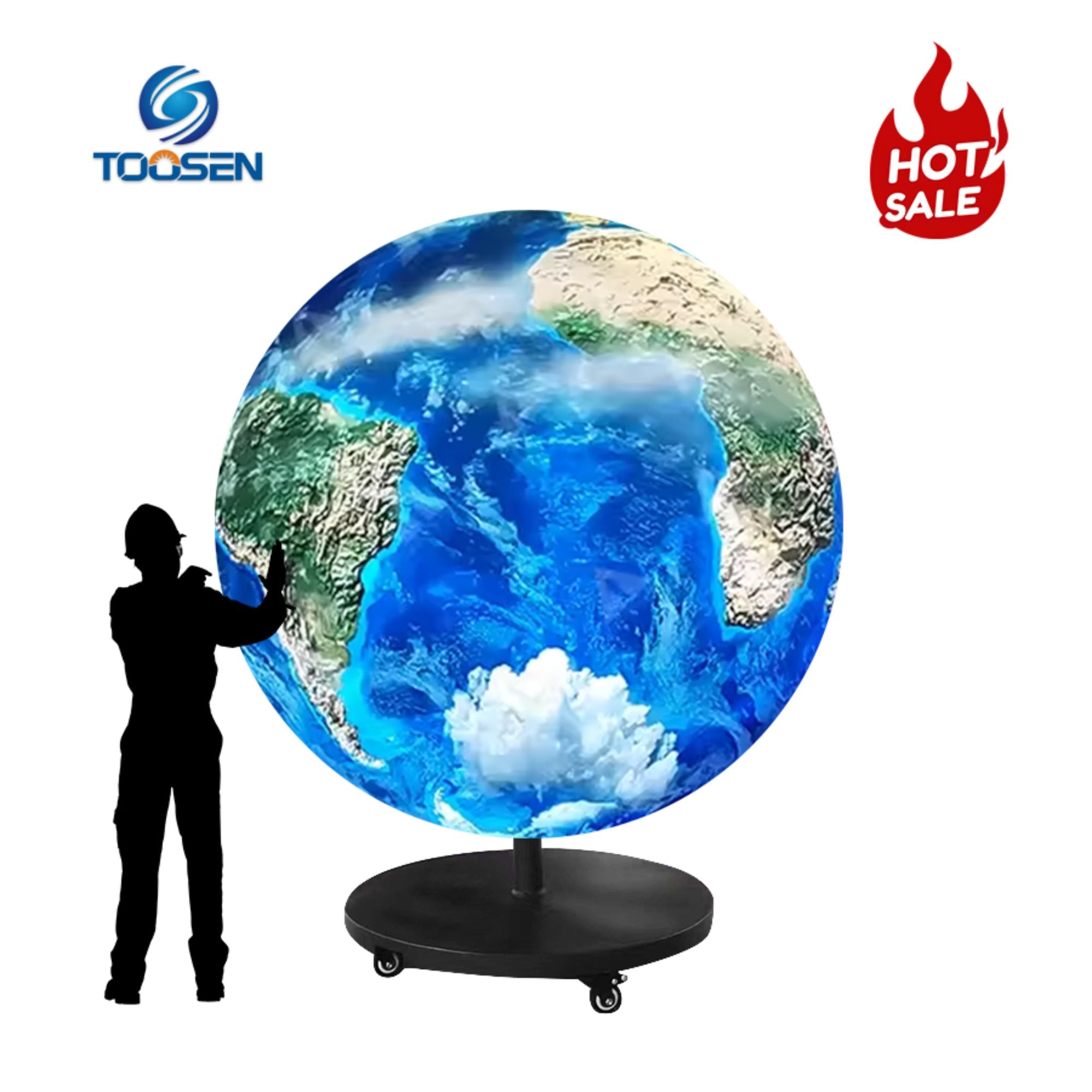
Yes. Many LED systems support circular, ring-shaped, and 360-degree configurations. However, larger circular installations require specialized support structures and more precise load calculations.
Most experts recommend inspecting suspension hardware, cables, brackets, and safety systems at least every six months. High-traffic venues and event installations may require more frequent inspections.
 EN
EN
 AR
AR
 BG
BG
 HR
HR
 CS
CS
 DA
DA
 NL
NL
 FI
FI
 FR
FR
 DE
DE
 EL
EL
 HI
HI
 IT
IT
 JA
JA
 KO
KO
 NO
NO
 PL
PL
 PT
PT
 RO
RO
 RU
RU
 ES
ES
 SV
SV
 TL
TL
 ID
ID
 SR
SR
 UK
UK
 VI
VI
 ET
ET
 HU
HU
 TH
TH
 TR
TR
 FA
FA
 AF
AF
 MS
MS
 GA
GA
 HY
HY
 AZ
AZ
 MN
MN
 UZ
UZ