Home > News > Industry News
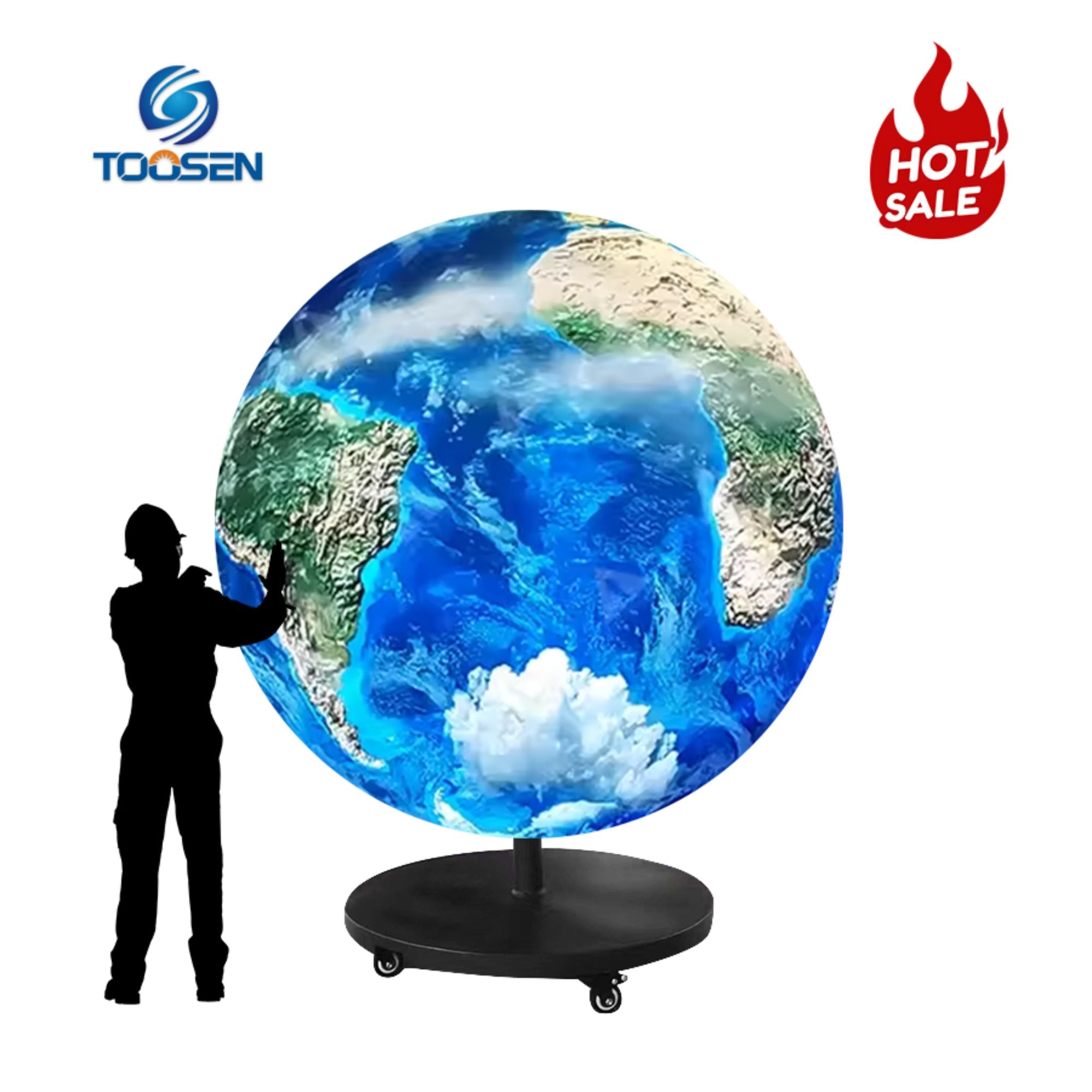
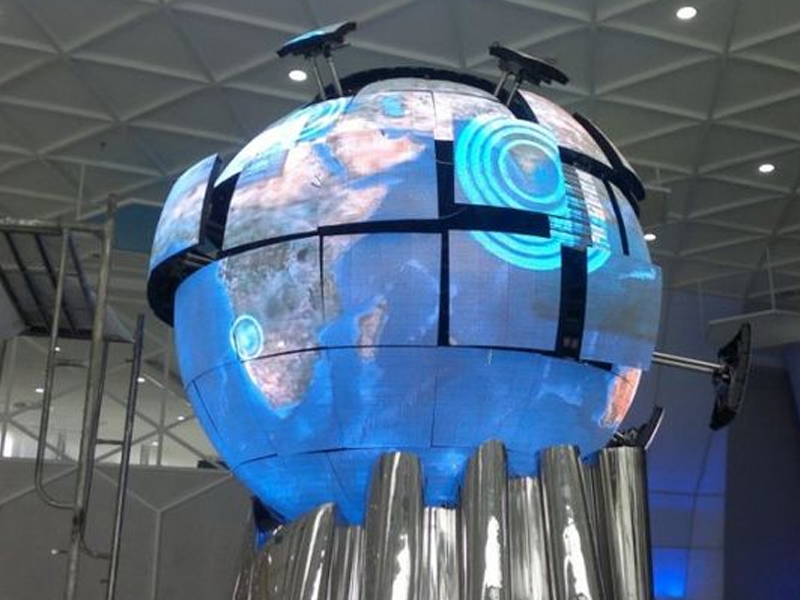
The floating spherical image immediately captures attention.
Many viewers struggle to understand how the display works, which makes it highly effective for exhibitions and promotional events.
Because the system uses far fewer LEDs, manufacturers can significantly reduce material costs.
This makes large-diameter installations more affordable.
Traditional solid spherical LED displays become extremely heavy as their size increases.
In contrast, a rotating sphere remains relatively lightweight because most of the interior volume is empty.
The reduced weight allows designers to create giant spheres several meters in diameter without excessive structural loads.
Since the sphere is hollow, designers can place:
inside the display.
Some large installations even allow visitors to walk through the center.
Despite their advantages, rotating LED spheres also present several challenges.
High-speed rotation inevitably generates noise.
While modern motors can reduce sound levels, completely silent operation is difficult to achieve.
The slip ring remains one of the most common wear components.
Over time, continuous rotation causes contact surfaces to degrade, requiring maintenance or replacement.
When viewers stand very close to the display, they may notice:
These issues become less noticeable at normal viewing distances.
The display requires adequate:
Larger spheres may require specialized engineering assessments.
Because components rotate at high speed, protective barriers are essential.
Proper safety design helps prevent accidental contact and ensures long-term operational reliability.
Rotating LED spheres can simulate:
making them ideal educational tools.
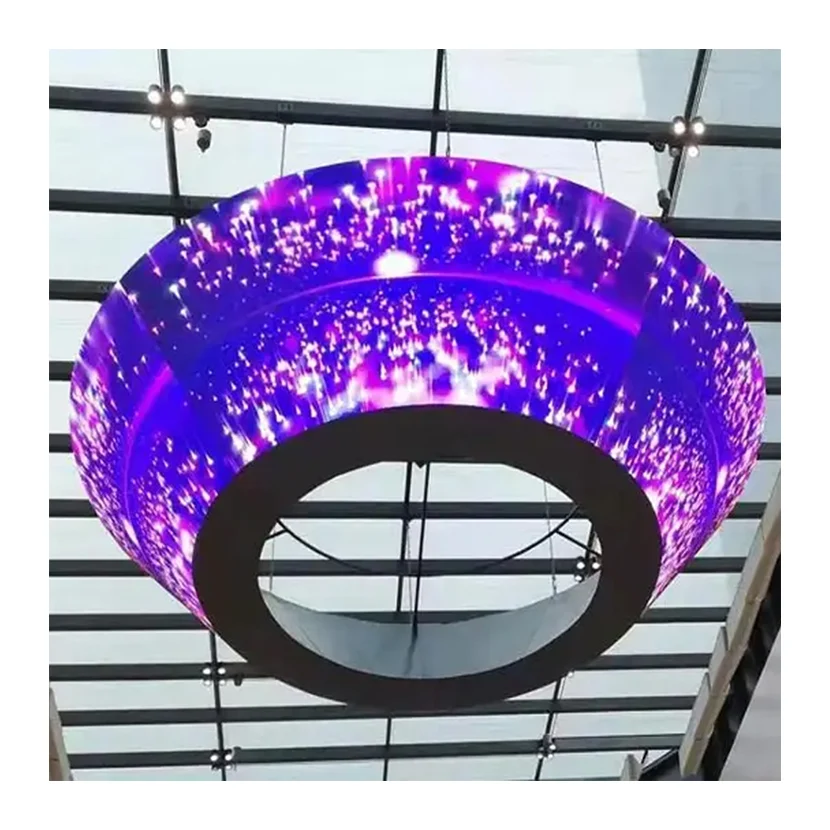
Many shopping centers suspend large rotating spheres above atriums to create a dramatic focal point.
Event organizers often place rotating LED spheres above the stage to create dynamic visual effects synchronized with music and lighting.
Technology companies, automotive brands, and innovation centers frequently use these displays to reinforce futuristic brand identities.
Large rotating spheres mounted on columns or towers can attract attention from long distances and create highly memorable advertising installations.
Before commissioning a custom rotating spherical LED display, several technical factors deserve special attention.
As sphere diameter increases, maintaining a smooth visual image becomes more challenging.
Larger displays require more advanced motor control and rendering algorithms.
Since the slip ring often determines system lifespan, many manufacturers recommend:
Every rotating sphere should undergo dynamic balancing tests before shipment.
Without proper balancing, vibration can quickly damage motors, bearings, and structural components.
Transparent protective enclosures should always surround the rotating mechanism, especially in public spaces.
Standard videos cannot simply be loaded onto a POV spherical display.
Instead, designers must create content specifically optimized for rotational rendering and persistence-of-vision technology.
Mechanical rotating spherical LED displays use persistence-of-vision technology to create stunning floating spherical images with far fewer LEDs than traditional solid sphere displays. By combining high-speed rotation, precise LED control, and sophisticated synchronization systems, these displays deliver a unique visual experience that attracts attention in museums, shopping centers, exhibitions, stages, and public spaces.
While they require careful engineering, dynamic balancing, and ongoing maintenance, their impressive visual impact and lower cost make them an increasingly popular choice for creative LED display projects worldwide.
 EN
EN
 AR
AR
 BG
BG
 HR
HR
 CS
CS
 DA
DA
 NL
NL
 FI
FI
 FR
FR
 DE
DE
 EL
EL
 HI
HI
 IT
IT
 JA
JA
 KO
KO
 NO
NO
 PL
PL
 PT
PT
 RO
RO
 RU
RU
 ES
ES
 SV
SV
 TL
TL
 ID
ID
 SR
SR
 UK
UK
 VI
VI
 ET
ET
 HU
HU
 TH
TH
 TR
TR
 FA
FA
 AF
AF
 MS
MS
 GA
GA
 HY
HY
 AZ
AZ
 MN
MN
 UZ
UZ