Home > News > Company News
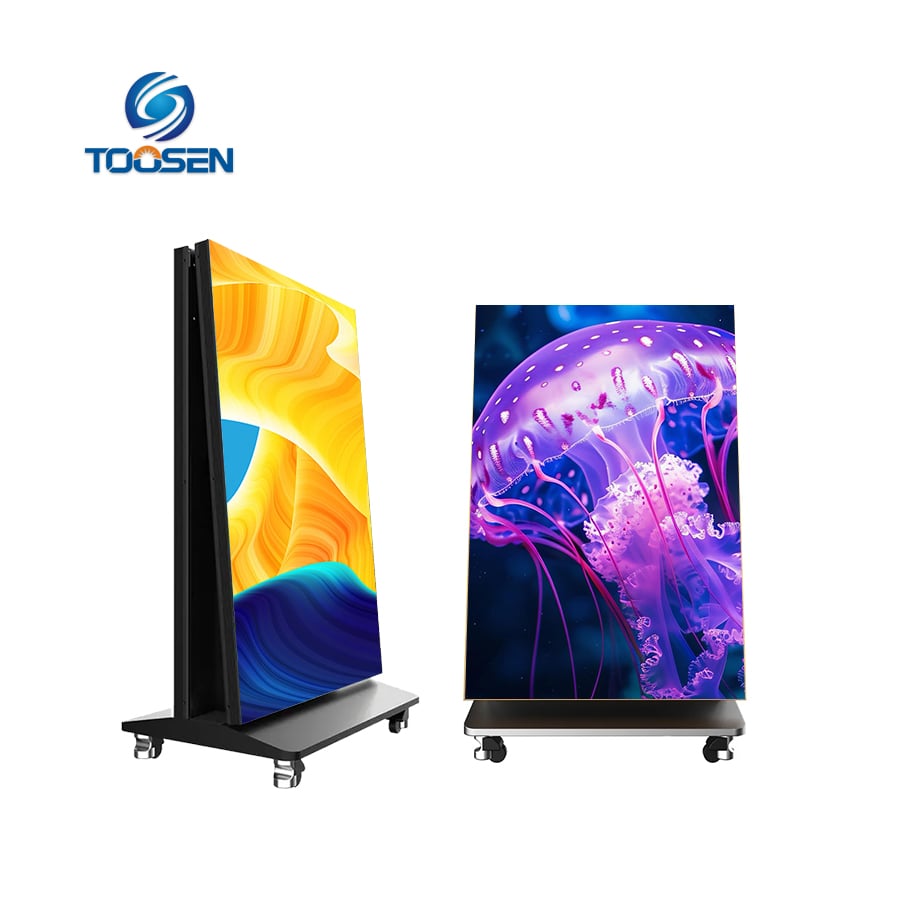
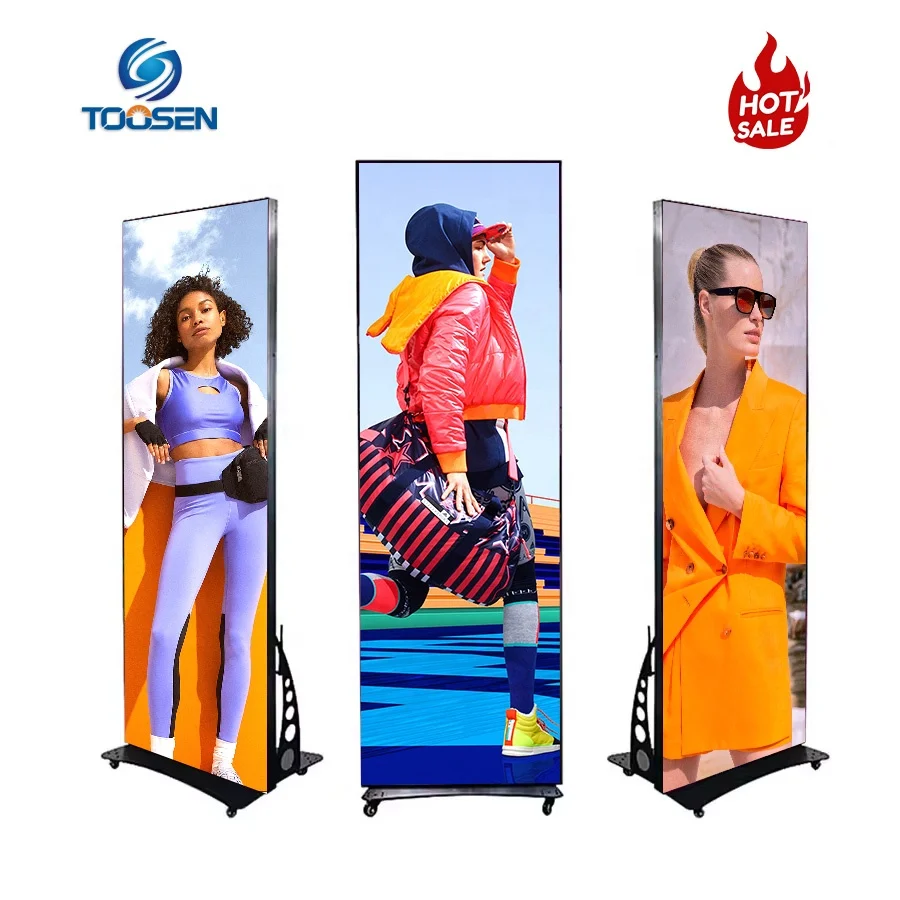
LED poster displays have become one of the most popular digital signage solutions for retail stores, shopping malls, exhibitions, airports, hotels, and corporate showrooms. Thanks to their ultra-slim design, high brightness, easy installation, and remote content management capabilities, LED poster screens provide a modern alternative to traditional printed posters.
To ensure excellent visual performance and long-term reliability, manufacturers follow a systematic production process from design to deployment.
The first step is to define the display specifications based on the installation environment and viewing distance.
Key factors include:
Choosing the appropriate pixel pitch ensures sharp image quality and smooth video playback. For close viewing environments such as retail stores and exhibition booths, fine-pitch LED poster displays typically deliver the best visual experience.
The performance of an LED poster display largely depends on the quality of its components.
A complete LED poster screen typically includes:
High-quality LED modules provide:
The LED control card processes image signals and manages content playback. A reliable control system ensures stable operation and smooth content display.
A high-efficiency power supply improves energy utilization and enhances overall system stability.
Ultra-thin aluminum cabinets offer:
Network modules, Wi-Fi modules, and cloud-control devices enable remote content management and monitoring.
After component selection, technicians begin assembly.
The production process generally includes:
Modern LED poster displays often feature modular construction, which simplifies maintenance and reduces installation time.
In addition, many manufacturers integrate wheels, foldable stands, or mobile bases to increase deployment flexibility.
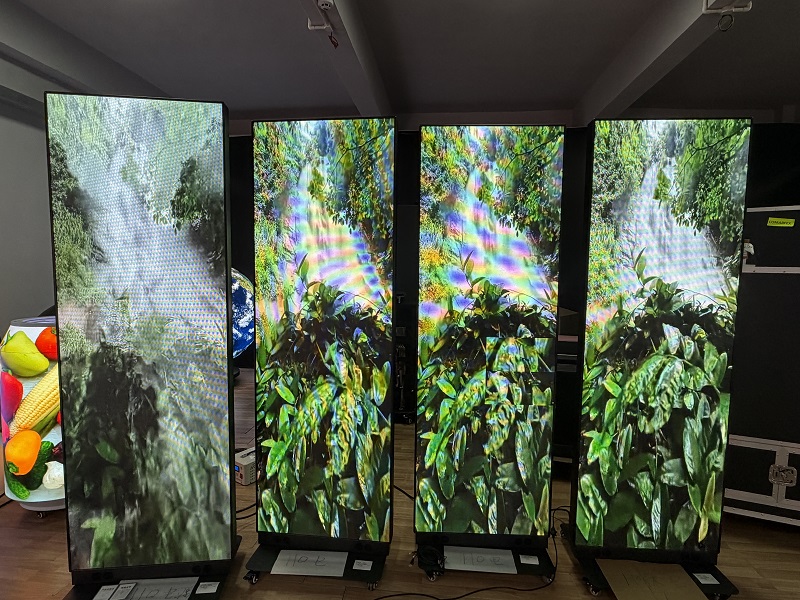
Once assembly is complete, engineers conduct comprehensive testing to ensure optimal display performance.
Testing typically includes:
Technicians verify that the screen achieves the specified brightness level while maintaining uniform illumination.
Color calibration ensures accurate color reproduction and consistent image quality across the entire display surface.
Engineers test signal transmission stability to eliminate potential communication issues.
Manufacturers usually conduct continuous aging tests before shipment to identify potential defects and improve long-term reliability.
Comprehensive testing helps guarantee stable operation after installation.
One of the biggest advantages of LED poster displays is remote control capability.
Through Wi-Fi, LAN, 4G, or cloud-based management platforms, users can:
As a result, businesses can update marketing campaigns instantly without replacing printed materials.
Ultra-thin cabinets create a modern appearance that blends seamlessly into commercial environments.
High-brightness LEDs ensure clear visibility even in areas with strong ambient lighting.
Most LED poster displays support:
Advanced power management systems help reduce energy consumption while maintaining excellent display quality.
Remote management platforms allow businesses to update promotions, announcements, and advertisements in real time.
Ultra-thin LED poster displays are widely used in:
Their portability and eye-catching visuals make them an effective tool for digital advertising and brand promotion.
An ultra-thin high-brightness LED poster display combines sleek design, vibrant visuals, and intelligent content management into a single solution. By carefully selecting components, performing professional assembly, conducting rigorous testing, and implementing remote control capabilities, businesses can achieve a highly effective digital signage system that attracts attention and enhances customer engagement.
As digital advertising continues to evolve, LED poster displays offer a flexible, cost-effective, and environmentally friendly alternative to traditional printed posters.
For indoor applications, brightness levels between 800 and 1,500 nits are typically sufficient. For storefronts with strong ambient light, higher brightness levels may be recommended to maintain visibility.
Yes. Most LED poster displays support cascading or splicing, allowing multiple units to create a larger video wall with synchronized content playback.
Absolutely. Modern LED poster displays support Wi-Fi, LAN, 4G, and cloud-based management systems, enabling users to update content, schedule programs, and monitor screens remotely from anywhere.
 EN
EN
 AR
AR
 BG
BG
 HR
HR
 CS
CS
 DA
DA
 NL
NL
 FI
FI
 FR
FR
 DE
DE
 EL
EL
 HI
HI
 IT
IT
 JA
JA
 KO
KO
 NO
NO
 PL
PL
 PT
PT
 RO
RO
 RU
RU
 ES
ES
 SV
SV
 TL
TL
 ID
ID
 SR
SR
 UK
UK
 VI
VI
 ET
ET
 HU
HU
 TH
TH
 TR
TR
 FA
FA
 AF
AF
 MS
MS
 GA
GA
 HY
HY
 AZ
AZ
 MN
MN
 UZ
UZ