Home > News > Industry News
When you buy an LED screen, it is easy to focus entirely on visual specs like brightness and resolution. However, you must also consider long-term maintenance. Eventually, a pixel will die, or a receiving card will need a quick replacement.
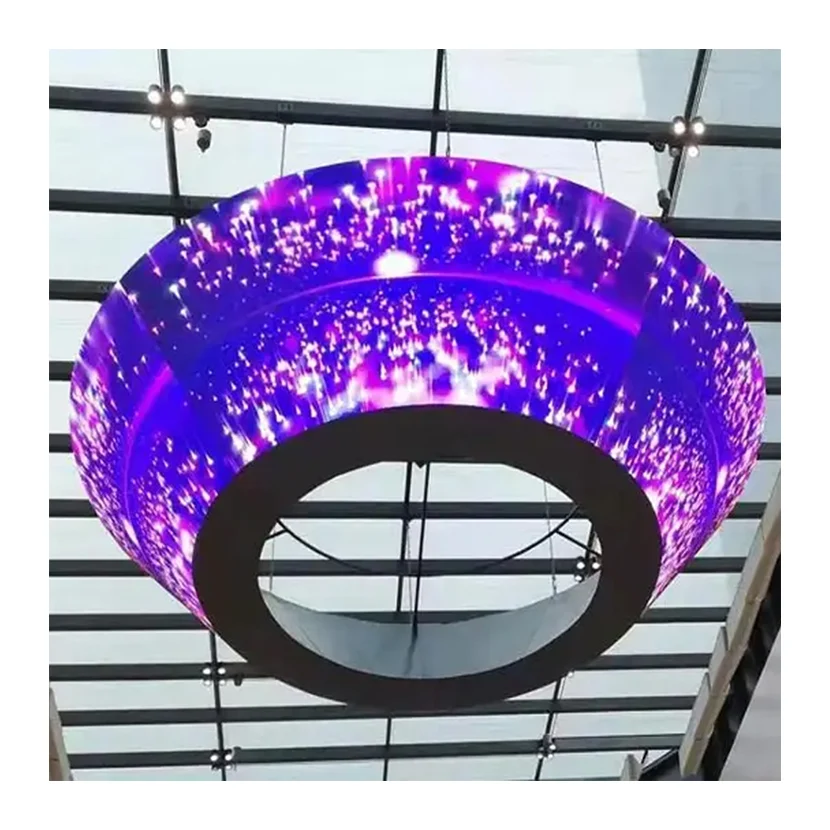
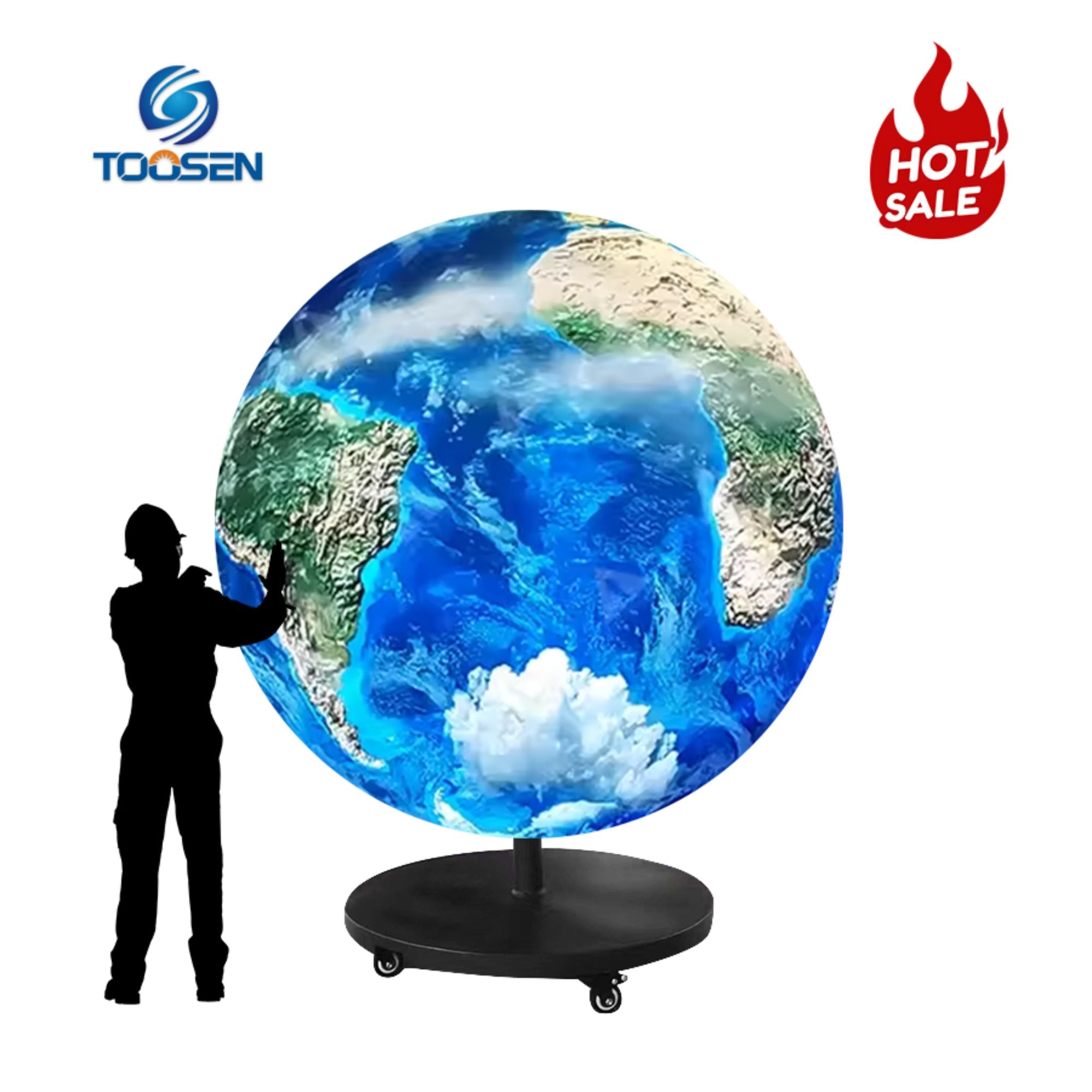
For a complex, three-dimensional structure like a hemispherical LED screen, your maintenance access path is a critical design choice. Choosing between Front-Service (Front Maintenance) and Rear-Service (Rear Maintenance) will fundamentally alter your installation space, your structural budget, and your team's day-to-day operations.
Let's compare both options to see which one fits your project best.
Front-service setups allow you to remove individual LED modules directly from the viewing side using a specialized vacuum tool or a magnetic release mechanism.
[Maintenance Tool] ➔ Pulls Module Forward ➔ [Front Face of Screen]
(No rear space required)
Ultra-Slim Profile: Because you do not need access space behind the screen, you can mount the structural frame directly against a concrete wall. This saves an immense amount of floor space.
Perfect for Indoor Domes: This setup is ideal for planetariums, corporate lobbies, or retail environments where every square foot matters.
Complex Module Mechanics: Front-access modules require high-precision magnetic latches or mechanical locking pins. These components raise the initial hardware cost.
Rear-service designs require technicians to step inside the structural skeleton of the hemisphere to swap out parts from behind the display matrix.
Lower Module Cost: These modules use standard, straightforward mounting screws and brackets, making the individual panels less expensive than their front-service counterparts.
Cleaner Exterior Aesthetics: Because there are no front-facing release mechanisms, the exterior surface remains perfectly uniform.
Easier Massive Scale Maintenance: Technicians can comfortably walk along internal catwalks to service large-scale, outdoor landmark spheres without needing external scaffolding or cranes.
Large Spatial Footprint: You must leave a maintenance corridor (typically 2 to 3 feet wide) behind the screen, which significantly eats into your venue's usable space.

| Feature | Front-Service Domes | Rear-Service Domes |
| Space Required | Minimal (Can flush-mount to walls) | Significant (Requires 2–3 ft internal walkway) |
| Module Hardware Cost | Higher (Due to magnetic/latch engineering) | Lower (Standard structural mounts) |
| Best Used For | Indoor planetariums, retail displays, tight spaces | Massive outdoor spheres, large dome theaters with catwalks |
| Tooling Needed | Vacuum suction tools / Magnetic keys | Standard hand tools (Screwdrivers, wrenches) |
The choice boils down to a simple trade-off between spatial constraints and budget. If your venue cannot spare any real estate behind the screen, invest in a front-service display. However, if you are building a massive, free-standing architectural icon and have plenty of internal space, a rear-service layout will save you money on hardware and simplify long-term servicing.
 EN
EN
 AR
AR
 BG
BG
 HR
HR
 CS
CS
 DA
DA
 NL
NL
 FI
FI
 FR
FR
 DE
DE
 EL
EL
 HI
HI
 IT
IT
 JA
JA
 KO
KO
 NO
NO
 PL
PL
 PT
PT
 RO
RO
 RU
RU
 ES
ES
 SV
SV
 TL
TL
 ID
ID
 SR
SR
 UK
UK
 VI
VI
 ET
ET
 HU
HU
 TH
TH
 TR
TR
 FA
FA
 AF
AF
 MS
MS
 GA
GA
 HY
HY
 AZ
AZ
 MN
MN
 UZ
UZ